The green rift
Why coalitions opposed to environmental regulations often splinter

Welcome to Carbon Risk — helping investors navigate 'The Currency of Decarbonisation'! 🏭.
Carbon Risk contributes 1% of its revenue to Stripe Climate, helping to scale permanent carbon removal technologies. Thankyou to all the subscribers that support Carbon Risk.
If you enjoy this article please share it with someone and check out the Table of Contents for more insights.
Efforts to reform environmental policies often encounter tough lobbying from business. In theory, firms should be united in standing against more stringent policies, particularly as they tend to push up the cost of doing business. Nevertheless, firms often split from their competitors, morphing into powerful advocates instead. Understanding this dynamic is important as calls for reform to climate and environmental policies clash with concerns over energy security, affordability, and industrial competitiveness.
Europe is where this is playing out right now as governments dither over whether or not to delay the EU Methane Emission Reduction Regulation (MER). To recap, from January 2027 importers of fossil fuels into Europe must demonstrate that methane monitoring, reporting and verification (MRV) systems applied by exporters are equivalent to those used in the EU.
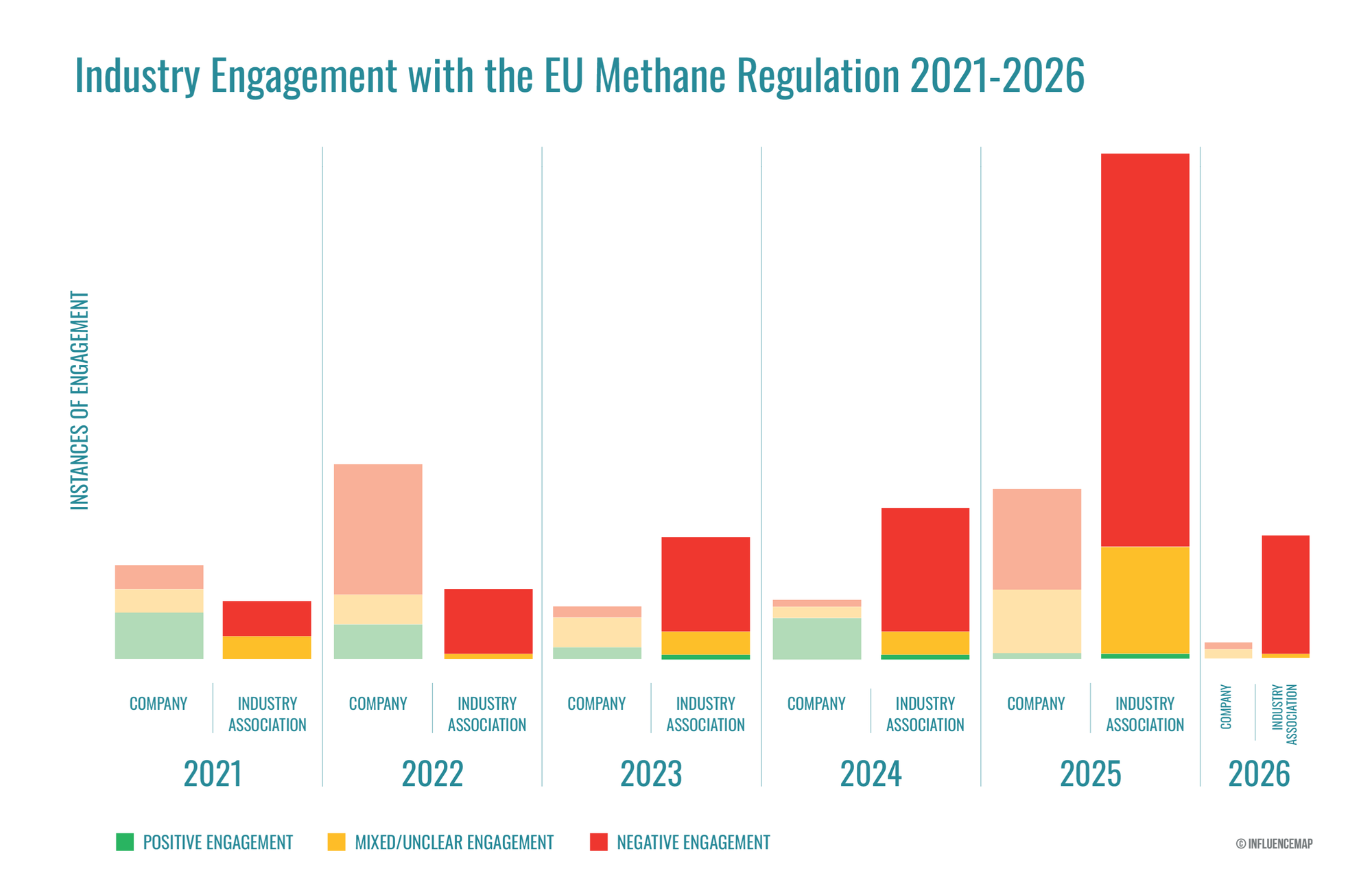
There's been a divergence of opinion among the energy industry's loudest voices according to InfluenceMap, the global climate and sustainability think tank. European energy industry associations have framed MER as a "threat to energy security and competitiveness, and advocate for delay, dilution, and reopening the regulation." Last week the President of France, Emmanuel Macron called for a one-year postponement to the regulations, citing those same security of supply concerns.
By contrast, the energy companies which the same industry bodies say they represent, have typically framed MER as a technical challenge, expressing "conditional support for its objectives but calling for flexibility in implementation." Rather than delay and dilution, the energy industry have increasingly called on the EU to toughen up the regulations, and introduce a more comprehensive compliance scheme.
Breaking ranks
In a paper published by the Australian National University, Nikolai Drahos develops a theory as to why companies often break ranks from their competitors to support environmental policy, based on how American oil and gas company's positioning on federal methane emission regulation evolved between 2014 and 2021.
While previous theories of how individual firms lobbying position has focused on economic, strategic, and institutional factors, there has been little discussion over how firms interact to determine their position, nor what explains the factors driving coalitions, as opposed to individual businesses. The paper suggests three are especially important in driving position taking:
1) Distributional effects - whether a firm is net winner or loser relative to their current competitors (and potential entrants) in terms of market share captured or lost may influence whether they support it or not.
Related to this, firms also need to consider the risk that switching from opposition to support might lead to even more regulation in the future, and how that might affect distribution - a slippery slope the author calls "precipitation risk."
2) Stakeholder pressure - whether the pressure comes from NGOs or investors, it is especially powerful if firms perceive regulation as a way to lift the industry's collective reputation, and finally,
3) Policy inevitability - the degree to which a firm believes a policy reform is likely. A supportive stance can mean getting closer to government and being in a position to influence the reforms in its favour.
Business support for an environmental policy tends to be unified when it is seen as inevitable and there is pro-regulatory stakeholder pressure, even though some members of a coalition incur distributional costs. By contrast, opposition is likely to be strongest when there is widespread negative distributional effects, the policy is not seen as inevitable, and firms are under pressure from stakeholders to take an anti-regulatory position.
Whether the coalition is opposed (or less likely, in support) of the environmental policy, game theory offers a window into why coalitions encourage a unified position. Remember that unlike the inmates in the Prisoners Dilemma, firms encounter other coalition members frequently across multiple domains. It means they can often be reluctant to break ranks and support an environmental policy, especially if it could jeopardise cooperation on other important business matters in the future.
A firm is most likely to break ranks from the group (a phenomenon the author calls “coalition splintering”) if it stands to benefit economically from the regulation (or can easily absorb its costs), and is under intense pro-regulatory stakeholder pressure to do something about the issue being addressed by the regulation.
Obama-Trump-Biden-Trump
Back in 2014, the US oil and gas industry (trade associations and individual upstream and midstream companies) were united in opposition to methane regulations put forward under the Obama administration. There was little in the way of pro-regulatory support for methane curbs from stakeholders, and the rational thinking among corporate executives was that if they could delay regulation even if their legal challenges failed.
Things started to change as the first Trump presidency began. Much like his second term it came with promises of energy independence and dismantling Obama-era environmental policies. In late 2019, Trump eliminated methane controls on oil and gas facilities. However, this was met with opposition by ExxonMobil and eleven other energy companies, opening up a split in the coalition.
The falling cost of methane monitoring, steps already made by some firms to cut emissions, and concerns that a patchwork of state rules would add costs, all added up to persuade ExxonMobil and others that powerful distributional effects meant they should support the methane regulations. There was also increasing stakeholder pressure from NGOs and investors, concerned about the environmental impact and the bad image it gave the industry (see The carbon tracking opportunity: Real time tracking of GHG emissions and carbon sinks is a huge growth market).
The only factor not going in the way of the supporters (and a key reason why oil and gas companies didn't shift en masse from opposition to support) was that policy inevitability was seen as very low under Trump. But things were to about to change as the next presidential election swung round in November 2020.
Biden came to office promising to restore US leadership on climate change, and among other directives, stating that he would unwind Trump's rollback of the methane regulation. At last the final domino was about to fall: policy inevitability. Meanwhile, distributional effects became even stronger, and pro-regulatory stakeholder pressure intensified under Biden's term in office.
What to make of the second Trump term? Well, he was quick to postpone Biden's Waste Emission Charge (WEC) until 2034, removing a key regulatory driver. Although few firms were willing to publicly back the methane fee, it doesn't mean the trend towards lower methane emissions among US oil and gas producers is set to end. Stakeholder pressure for curbs on methane emissions may have ameliorated, but it hasn't swung decisively in the opposite direction either (see Gas pains: A super-pollutant gets the cold shoulder).
The most important factor is that the distributional effects remain a powerful driver. Now that much of the hard work is done, few energy companies seem willing to forego a return on the time and money spent fixing methane leaks. And as America has become a huge net exporter there's got to be a massive market for low methane intensive oil and gas right (see Step on the gas: Donald Trump may have ditched the methane fee, but energy producers are still under pressure to cut emissions?)?
The world is the stage now
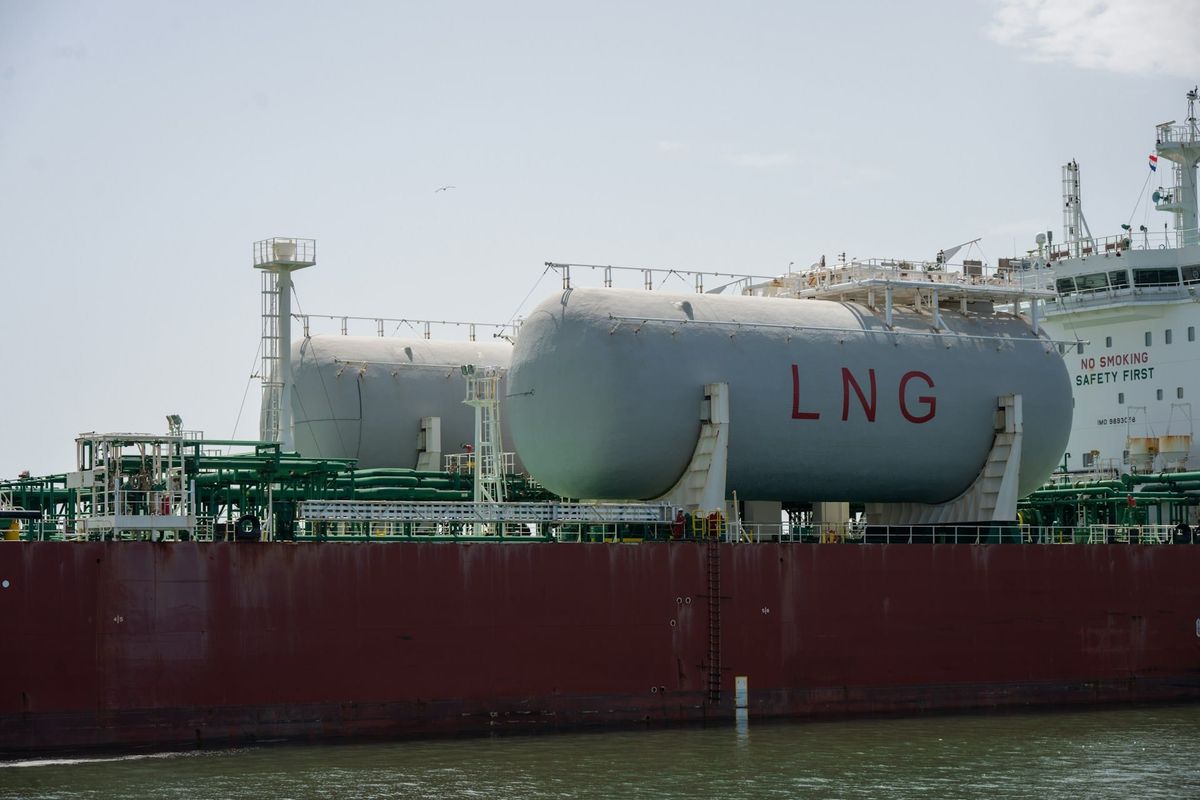
Well yes, and that's where Europe (and parts of Asia, such as Japan, South Korea, and China too) moves back into the picture. What does this tell us about industry support for EU ETS reform and the delay or reform of the MER? First, what was once being played out on a national level, is now being played out on a global stage. Now that US energy producers are focused on the export market, federal regulation (or the lack of it) is less important. What matters is the policy inevitability of regulation imposed by your major customers, and the EU is the worlds largest importer of LNG.
This could be the reason why some players are pressing for much more of a compliance mechanism than exists at the moment. To delay a weak regulation in need of improvement dampens the signal as there's a risk that it is delayed indefinitely or worse, gets cancelled entirely. There's a distributional aspect to this too. Oil and gas exporters with low methane intensity are going to want to leverage their investment and secure a competitive advantage relative to more methane intensive exporters elsewhere.
The breaking ranks framework could be particularly powerful right now as environmental and climate policies come under fire. Whether you are involved in making policy or looking to influence it, understanding the three levers that can cause an anti-regulatory coalition to fracture (distributional effects, stakeholder pressure, and policy inevitability) is vital.
 Peter Sainsbury