When trust is lost
As protests spread across Europe's cities, ETS2 may be caught in the cross-fire


Welcome to Carbon Risk — helping investors navigate 'The Currency of Decarbonisation'! 🏭.
Thank you to all the lovely subscribers that have taken out a paid subscription. Your support is much appreciated. Carbon Risk contributes 1% of its revenue to Stripe Climate, helping to scale permanent carbon removal technologies.
If you enjoy this article please share it with someone, and check out the Table of Contents for more insights.
"If the people cannot trust their government to do the job for which it exists – to protect them and to promote their common welfare – all else is lost." - Barack Obama
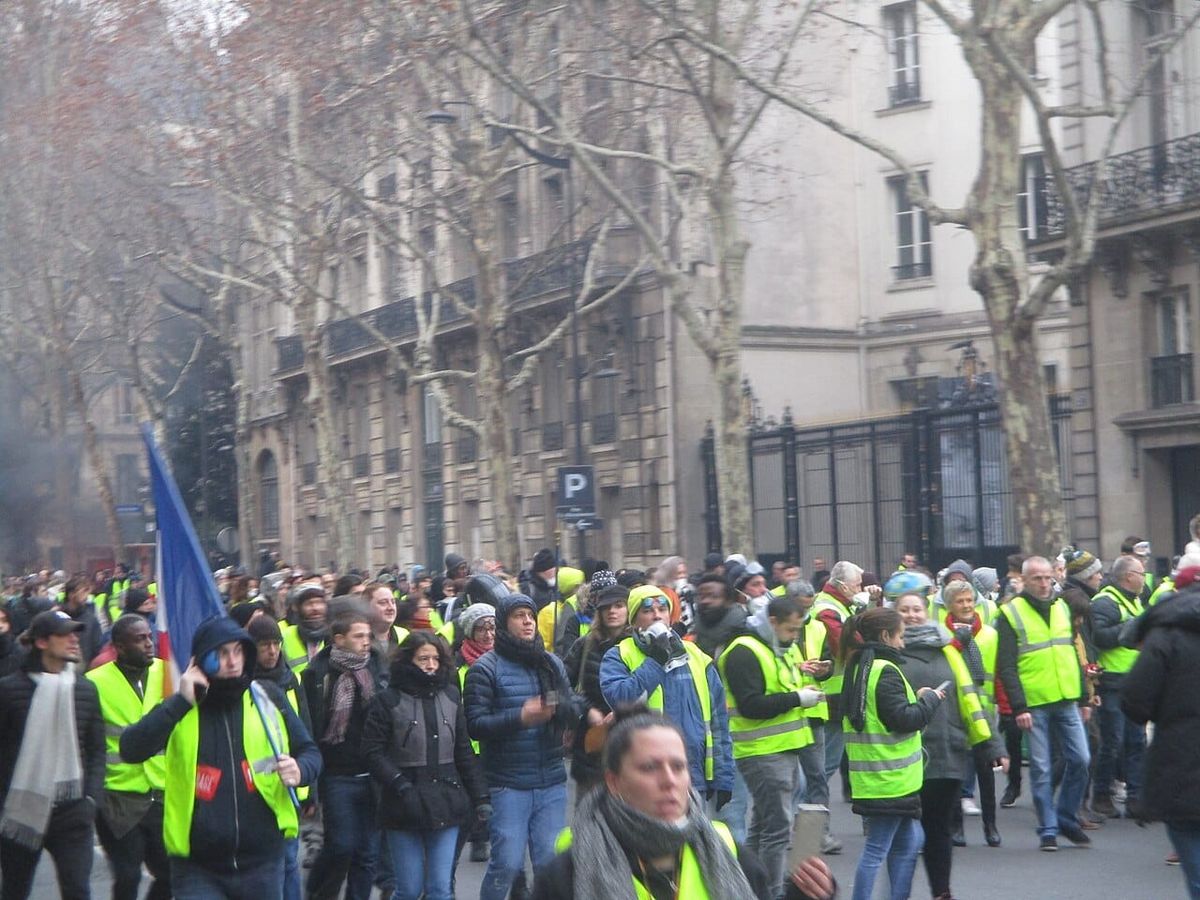
The initial spark for the student protests in France was the dire state of school facilities and a shortage of teachers. A largely peaceful demonstration has since morphed into something much more violent as mob agitators spot an opportunity to create disorder.
Although not on the same scale as France, protests have since erupted in other parts of Europe including Belgium, Spain, and Italy. Concerns over poor education standards and the high cost of housing are at the forefront of concerns among most demonstrators. A common thread beneath the unrest is Europe's fragile economy, frustration with the speed of government reforms, and a growing perception that people are being left behind as inequality widens.
To paraphrase Sarah Wilson in her newsletter This is Precious, Europe is having a painful conversation with itself about whether its promises still hold.
The protests come at a delicate time for Europe's governments less than 15 months before Europe's second emissions trading scheme (ETS2) is scheduled to start on 1st January 2028. To recap, ETS2 covers emissions from fossil fuels used in buildings and transportation, responsible for around 40% of the blocs greenhouse gas emissions.
For more than a year now several EU Member States have complained that ETS2 would impose heavy costs, especially on poor, rural communities dependent on fossils fuels for heating and transport. If ever there was a time to launch a regressive climate policy, this isn't it.
Last October the European Commission finally responded to the cost of living concerns, proposing a revision to the rules and delaying the start of ETS2 by one year. In the past week, EU governments rubber stamped changes to the Market Stability Reserve (MSR), tasked with strengthening the system’s ability to respond to unwarranted increases in the ETS2 carbon price (see Softening the blow).
But will this be enough to stem the concern of governments worried that their voters will blame them for higher fuel prices?
The political uncertainty is reflected in the ETS2 Dec 2028 futures market. Here the bid-offer spread has widened from €5 up until the end of August, to a huge €10 during September and into October. By contrast the typical bid-offer spread for EUA futures is €0.01.
Governments have long recognised the trade-off between equity and efficiency in the design of climate policy. ETS2 is a particularly acute example of the challenge policymakers face between supporting lower-income households on the one hand, and smoothing the adoption of low-carbon technologies that can mitigate the impact of ETS2 on the other.
For example, governments could simply recycle ETS2 revenues uniformly to households (also known as a tax and dividend policy). This shifts the burden to high-income households, thereby reducing consumption and disposable income inequality. The downside to this approach is that the ETS2 carbon price will need to be higher, and it will tend to result in significant aggregate output losses.
Alternatively, governments could redirect the revenues into subsidising the supply of heat pumps, EVs, and the power grid updates necessary to enable the EU to meet its climate targets. The upside is that it will likely require a lower ETS2 carbon price. Even so, low-income and asset-poor households still bear the brunt of the costs, resulting in a widening in inequality.
Is there a Goldilocks approach that simultaneously maximises both equity and efficiency? A recent paper by the Royal Economic Society sought to quantify the equity-efficiency trade-off involved with the use of carbon taxes to meet Europe's green transition targets.
It finds that over the long term, shifting from a carbon tax with a pure transfer to one with a pure subsidy reduces the adverse impact on output, but at the cost of a roughly 3.46% increase in the Gini coefficient of expenditure (a measure of inequality) for every percentage point of output preserved.
In short, there is no Goldilocks trade-off whereby carbon pricing is used and revenues are either recycled, used to fund subsidies, or some combination thereof. As the paper concludes, the "optimal policy mix will ultimately depend on societal preferences over these competing objectives."
Another recent paper, this time published in Nature Climate Change, states that restricting carbon pricing policy to either transfers or subsidies leads to an inevitable trade-off in inequality, both between lower and higher income groups, but also even within individual income groups.
The authors suggest that this particular trade-off can be solved by using another tool in Europe's climate policy armoury: non-price policies such as standards, mandates, and other regulations. They argue that these generate less horizontal redistribution (i.e., within income levels) than carbon pricing regulations since the costs involved with switching technology don't involve having to pay a carbon cost on the remaining emissions.
As the paper states, ETS2 was "originally conceived as a backstop policy complementary to national policies". The extent to which the EU climate policy mix will rely on carbon pricing is then largely determined by complementary policies of its Member States. However, these differ widely depending on local circumstances, such as the cost of energy, the relative price of electricity versus natural gas, and the availability of skilled labour and other factors that determine the upfront cost of installing technologies such as heat pumps.
For example, Agora calculated the additional carbon price required for a heat pump to break even in ten years, across several EU Member States, taking account of the switching costs involved and the price of electricity in late 2024. All countries (except France and the Netherlands) required a carbon price of at least €100 per tonne of CO2 to switch. The necessary carbon price rose to more than €200 per tonne CO2 in the Czech Republic, and over €400 per tonne CO2 in Germany! (see Hot property: The long-term outlook for the ETS2 carbon price is tethered to heat pumps).
Whatever way Europe's governments attempt to solve the problem, it will always boil down to trust.
The experience in France in 2018/19 shows that no government should be complacent when it comes to playing fast and loose with their citizens and the cost of fuel. France introduced a carbon tax on fuel in 2014 at €7 per tonne CO2, it rose to €44.60 per tonne CO2 in 2018, and was then supposed to rise every year to €86.20 per tonne CO2 by 2022.
Instead of recycling some of the revenues to those hit hardest by the tax, the government largely used the revenues to fund general taxation, wind generation capacity or other green investments. In short, nothing to support low-income households or otherwise adapt to higher fuel prices.
Hundreds of thousands of protesters turned out on the streets, beginning in the provinces but quickly spreading to the heart of government in Paris. Nicknamed for the safety vests worn by protesters, known as gilets jaunes, the yellow vest movement sparked a political crisis for the French Government (see Europe must learn from Canada's 'price on pollution' debacle).
The sense of injustice was made worse after it was revealed that the 2018-19 French budget would make the top 1% more than 5% better off, while the bottom 20% would all be worse off. In late 2018, in a major concession to protesters, the government first postponed the 2019 tax rise for six months, before then freezing the tax.
Alas the damage was done.
A survey conducted in spring 2019, three months after the government abandoned the tax hike, found that 70% disapproved of such a tax and dividend policy, made worse by the fact that almost nine in every ten respondent overestimated the negative impact it would have on their purchasing power. Even when attempts were made to correct people's mistakes, it failed to convince people. They were wedded to their beliefs, and crucially, their distrust in the government.
From education to housing, trust that governments in Europe will deliver on their promises is at rock bottom. Unless trust is restored it is very unlikely that citizens will believe their governments when the say that a share of the revenues from ETS2 will be recycled back to them, or that the money will be used to make it easier for them to install a heat pump, or buy an EV.
That's what happens when trust is lost. It infects everything.
 Peter Sainsbury