Tackling carbon wealth inequality


Welcome to Carbon Risk — helping investors navigate 'The Currency of Decarbonisation'! 🏭.
Polluters impose costs on everyone else – a 'negative externality' in the economic jargon. The symptoms of climate change are expected to intensify as the Earth continues to warm: extreme heat, wildfires, flooding, etc. The health and economic toll from rising global greenhouse gas emissions falls especially heavily on those least able to adapt.
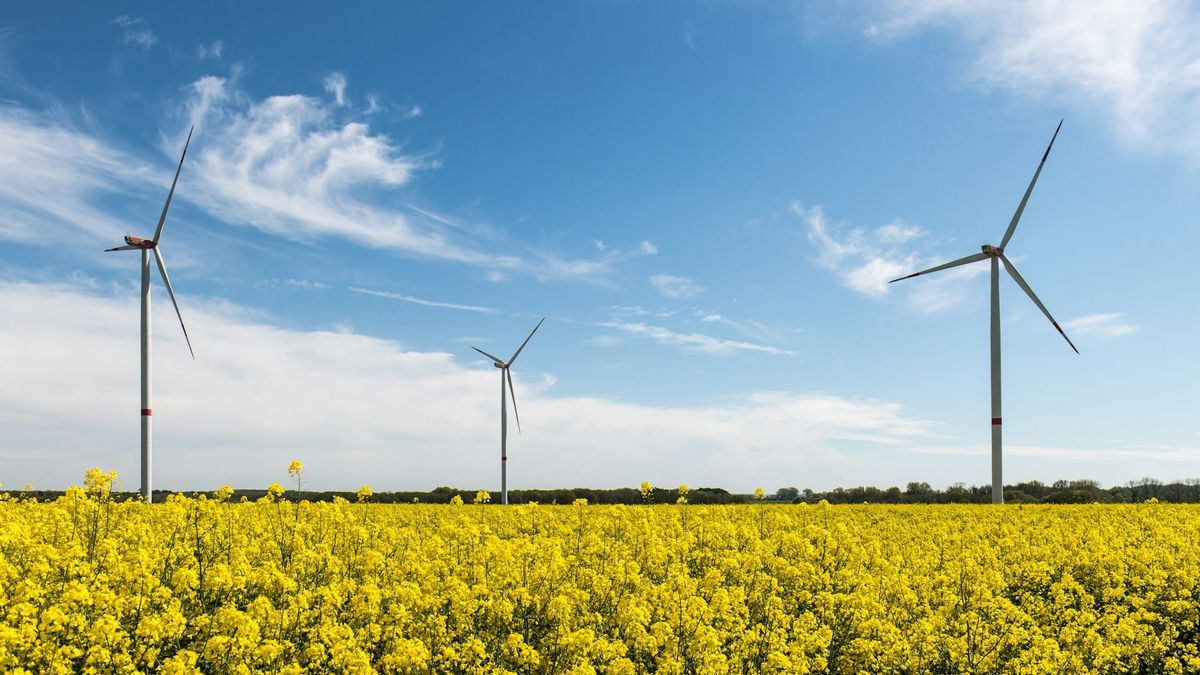
Carbon taxes and carbon pricing are a means by which governments can push polluters to internalise the cost of those emissions. This should push them to cut back on emissions intensive activities and seek out cleaner alternatives. In Europe for example, carbon pricing has been a fundamental driver towards lower power emissions, with utilities curbing coal-fired generation, and expanding solar and wind generation capacity.
However, by dint of their historical application to fossil-fuel powered electricity generation, the impact of carbon taxes and carbon pricing often falls heavily on those least able to afford them. Low income households spend a disproportionately large amount of their earnings on energy, and tend not to have the resources to stump the upfront cost related to energy efficiency measures, the cost of an EV or a heat pump installation.
The backlash to Canada's consumer carbon tax ahead of the 2025 general election, coupled with more recent delays to ETS2 (Europe's second emissions trading scheme, focused on transport and heating fuels), has forced governments to recognise that the current approach may not be politically and economically sustainable (see Europe must learn from Canada's 'price on pollution' debacle)
Up until now carbon pricing has been largely divorced from concerns about wealth inequality. So far at least, demands for political reform have been focused on calls to raise taxes on capital and corporate income, and providing a safety net to workers affected by developments in AI. The connection to carbon wealth inequality - that the richest in society are contributing the most to the problem - is yet to be realised. Developments in the science of climate attribution may change that.
Two-thirds of the 0.61°C increase in global average temperatures observed between 1990 and 2020 is attributable to the wealthiest 10%, according to a recent study published in the journal Nature Climate Change. It means that the richest 10% of the world's population (defined as those earning at least €43k per year, or ~$50k) were responsible for 6.5 times more warming than the global average.
While the top 10% was responsible for 6.5 times the global average warming, the top income brackets contributed far more. The study found that the top 1% and 0.1% respectively contributed 20 and 76 times more to climate change over the three decades. The image of private jets perhaps exemplify this ratio best, but clearly the climate impact of consumption stretches much broader than this.
The wealth inequality impact is even more pronounced when it comes to the impact of extreme heat. The same research, led by academics at the International Institute for Applied Systems Analysis (IIASA) based in Vienna assessed that the top 10% richest people in the United States and China, contributed to a 2-3-fold increase in heat extremes across the Amazon, southeast Asia, and other vulnerable regions.
In late July, the National Academies of Science, America's top scientific advisory body, released a report confirming that similar studies employing 'extreme event attribution (EEA)' are improving and becoming increasingly mature. The report finds that confidence is highest for events such as extreme temperatures and heavy rainfall, things that are strongly influenced by a warming atmosphere.
Read this article and more with a 30-day free trial
How best to address carbon wealth inequality?
Writing in the Financial Times, Michael Strain, director of economic policy studies at the American Enterprise Institute argues that the American government should overhaul its broken tax system, and rather than tax income or AI, the government should tax consumption. The benefit of this approach is that it avoids distorting incentives and would capture additional government revenue from AI's spoils.
Overly complex tax systems is a problem in most countries. Consumption taxes are one of the most economically efficient and least politically contentious way of raising taxation.
For example, a value added tax or VAT (a fixed percentage tax on the sale price) only distorts incentives to the extent that some goods and services are exempted, experience suggests it is easier to raise than other taxes, and while still regressive, much less so when measured in terms of lifetime taxation. The standard average VAT rate across OECD countries stood at 19.3% in 2024, with the tax generating around one fifth of total OECD members tax revenue.
Almost all countries with a VAT have introduced exemptions for certain types of product and service, such as those related to health or education. More importantly, revenues can be earmarked for certain purposes, increasing the buy-in from citizens. For example, Estonia increased its VAT rate from 22% to 24% in July 2025 to pay for more defence spending, later making the move permanent. It's not a huge leap to suggest that VAT revenues be recycled back into green investments and / or used to reduce the rate of income tax for lower income households.
Although VAT could be used to in this way, one problem is that it doesn't specifically target the carbon intensity of the product or service. Back in the early 2010's an alternative proposal was put forward: the Carbon Added Tax (CAT). Analogous to the present day CBAM, the CAT would introduce an explicit carbon charge based on the embedded production carbon intensity. However, as experience with CBAM tells us, the administrative burden (monitoring and verifying the lifecycle carbon intensity for every product) would simply be too high.
What about the other options? While the opportunity for litigation against the largest emitters, or wealth taxes on the carbon intensive investments of the rich has got climate activists excited, neither approach is likely to work, and may even have unintended consequences. It's always much better to tackle demand, rather than supply.
For example, the dominant practice in sustainable investing has been to curb capital finance from 'brown' firms, and re-direct it towards 'green' firms, those who have already cut their emissions. However, this has been shown to provide only weak incentives for 'brown' firms to reduce their emissions, and at the expense of only minimal improvements in the emissions from 'green' firms (see The carbon footprint fallacy: Why green investors need to get their hands dirty).
Carbon risk comes in many forms, affecting economies, industries, right down to the individual. As the impact of the consumption habits of the rich on the climate become better understood and well known, we can expect greater demands for measures to counteract this imbalance. Just as calls for greater taxes on wealth have become louder and more vocal in recent years as concerns about AI have grown. Raising consumption taxes such as VAT could be a viable way forward to addressing carbon wealth inequality.
 Peter Sainsbury