Setting the standard
A market-led approach to pricing methane emissions

Welcome to Carbon Risk — helping investors navigate 'The Currency of Decarbonisation'! 🏭.
Environmental markets are typically imposed top-down, designed and consulted on by policymakers over a period of years. European climate policy is an example of this slow but methodical process in action. The EU emissions trading scheme, the cornerstone of Europe's climate policy, is one of the most notable outcomes.
But governments are often too slow, or fail to recognise the market failure. Then it's up to pioneering firms or organisations to pick up the slack and innovate where others can't or won't. The verified carbon market (VCM) exemplifies this ground-up, iterative, experiment-by-doing approach to environmental markets.
For example, the first carbon project dates back to the late 1980s when coal operator Applied Energy Services (AES) agreed to fund the planting of trees and the protection of forest in Guatemala, giving birth to the first avoided emissions carbon credit project (see Coming of age: The evolution of carbon credits fits a pattern of financial innovation).
Governments do eventually build on these early innovations and develop something akin to an environmental compliance market. The emergence of the Article 6 carbon market from the cauldron of experimentation that is the VCM, is perhaps the best example of this process in action.
Both approaches have their pros and cons. Neither is full-proof.
Sometimes regulatory compliance markets can create adverse unintended consequences. For example, a step change in US low-sulphur diesel mandates in the early 2000s, and subsequently, to California's Low-Carbon Fuel Standard (LCFS) in the late 2010s, contributed to a sharp jump in price volatility.
This may not have happened if the market had been developed by participants themselves, rather than be imposed by policymakers who think they know best. Under a bottom-up, market orientated approach, demand and supply for the physical underlying commodity may well have been better aligned.
Slow boil
In this article I'm going to have a look at the EU Methane Regulations (EUMR), exploring the faults in the top-down approach, and how bottom-up innovation could create the foundations for an even stronger environmental compliance market.
To recap, the EUMR, the bloc’s first legislation specifically targeting methane emissions from the energy sector, will set a maximum methane intensity threshold on domestic production and fossil fuel imports; the latter accounting for 60% of the EU's final energy consumption (see Electric avenue: Europe set to outline its path to electrification and energy security).
The regulation came into force in 2024, and has imposed progressively stronger obligations, starting with monitoring, reporting and verification (MRV). From January 2027 importers must demonstrate that MRV systems applied by exporters are equivalent to those used in the EU.
By August 2028, importers must report the methane intensity of shipments received for any contracts concluded or renewed after August 2024. Two years later, by August 2030, they must show that all imports meet the threshold (still to be determined, but potentially 0.2%).
At this point, if domestic fossil fuel producers and importers of oil, gas, and coal fail to meet the methane intensity, businesses will be stung with a financial penalty, set at a maximum of 20% of annual turnover.
The problem with the current penalty structure is that it fails to provide an adequate signal (whether positive or negative) to the part of the supply chain that are able to shift the needle on methane emissions - the upstream oil, gas, and coal producers.
Remember, more than 75% of the energy sectors methane emissions can be reduced by implementing leak detection and repair programs, installing vapour recovery units, replacing pumps and compressor seals, and replacing existing devices with instrument air or electric motor systems, according to the International Energy Agency (IEA).
None of these actions are within the purview of energy importers.
A hazy green light
The main problem with the current EUMR penalty structure, according to Davide Rubini, Head of Regulatory Affairs at Vitol, is that it fails to provide a usable price signal for upstream producers.
First, penalties are enforced at the Member State level. This fragmentation increases risk for producers, especially given the possibility of a patchwork of different monitoring and enforcement standards across Europe.
Second, fearing a potential penalty, individual buyers may be able to apply some pressure upstream. The problem though is that they are unlikely to have sufficient contractual leverage to push for operational upgrades.
Third, penalties levied on importers are not paid to producers who meet or go over and above the methane intensity requirements. In short, there is no mechanism in place that rewards improved methane intensity performance towards the upstream.
Fourth, even if an importer receives a penalty there are several ways that this signal could simply get lost. It may be absorbed or hedged away. Importers may simply avoid certain suppliers rather than push for improvements. Finally, the global nature of commodity markets means that penalty risk is just one of several factors that could influence investment in methane mitigation.
A much better idea, Rubini advises, is to do away with the current proposed system of penalties, and introduce a separately traded methane performance certificate instead. As outlined in his note, this approach transmits a much stronger signal from importer to producer.
By encouraging price discovery, a tradeable certificate reveals the value of verified methane performance, thereby creating a positive incentive for producers to invest. Unlike the current system, a tradeable (and bankable) certificate would reward first movers that have already invested in methane mitigation, encouraging them to go beyond the threshold set by the EU.
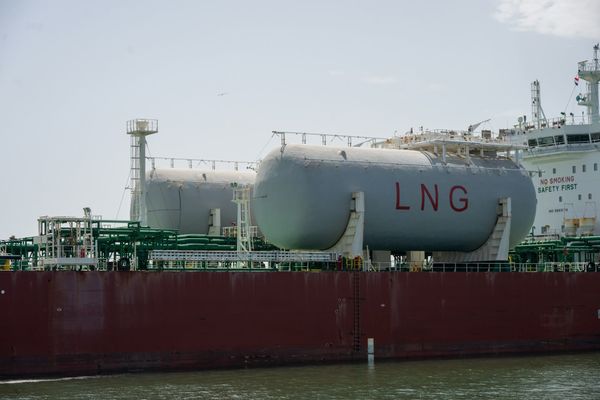
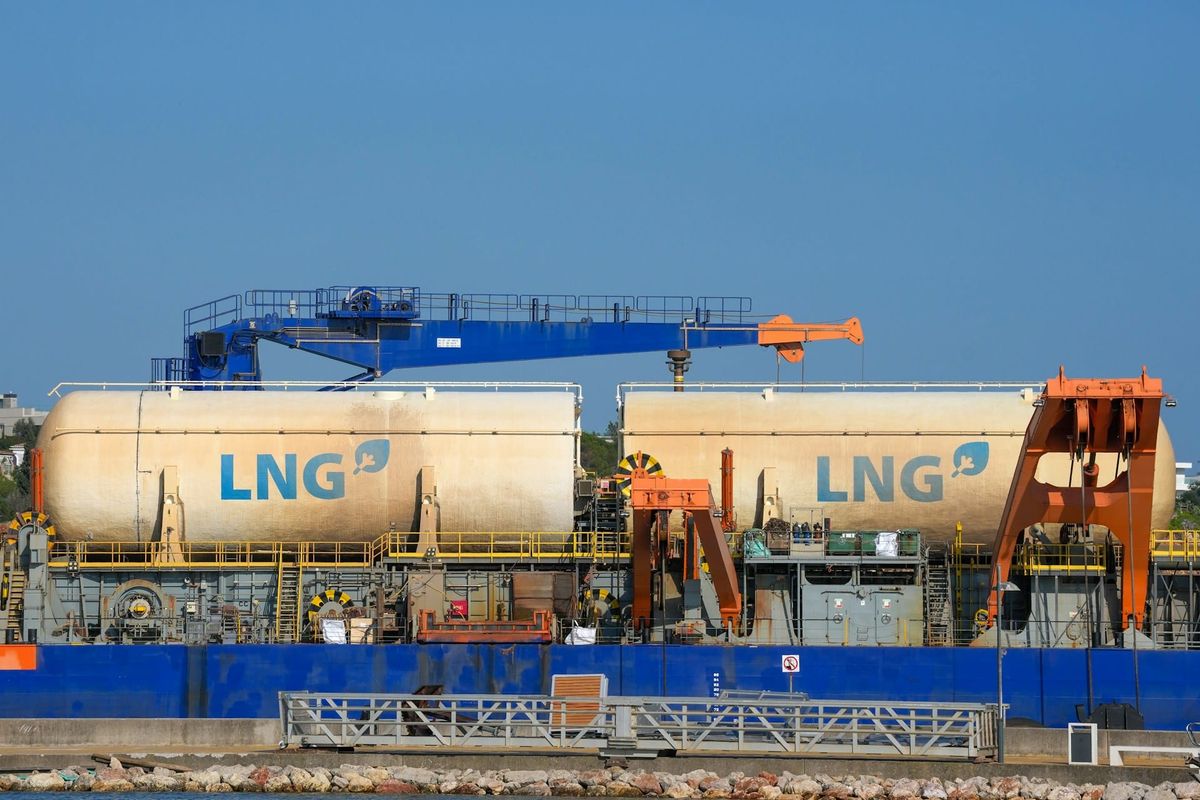
Finally, by separating the physical logistics from the environmental attributes it saves money and hassle. This is especially important in the global trade in LNG where tracing every molecule from well, via pipeline and carrier, to the final entry point in Europe is incredibly complex.
Beyond book-and-claim
A methane performance certificate is an example of an Energy Attribute Certificates (EACs).
Each certificate is unique, and its attributes include independently verified claims rights, documents of origin, and audit trails of methane intensity. The holder owns the legally recognised property rights to the underlying environmental attributes, and can be retired (also referred as ‘cancelled’) by, or on behalf of its owner to claim usage of the environmental attributes.
EACs are based on a book-and-claim chain of custody market mechanism. They enable suppliers of low-carbon solutions to “book” the environmental attributes of a good they have produced and for users to “claim” those same attributes, even if there is no actual physical exchange of energy between producer and importer. Book-and-claim can operate at the national level, or on a basin or regional level.
An alternative approach is known as trace-and-claim. In the case of LNG, trace-and-claim links the attributes of a given batch to a commercial delivery path. It requires demonstrating MRV for the relevant production assets within the basin associated with producing the LNG. It does not imply molecular tracking or real-time tracing of specific molecules.
Although all certificate approaches could help in delivering incentives across the supply chain, trace-and-claim is likely to have the largest impact on methane emissions. Analysis carried out by the University of Texas Energy Emissions Modeling and Data Lab (EEMDL) estimated that it could cut annual emissions in the United States by 250,000 Mt CH4.
In contrast, the research found that a national book-and-claim methane certificate would have exactly zero impact on emissions. The problem with this approach is that operators with existing low intensity supply will have strong incentives to rapidly increase certificate availability.
For example, EACs created in any oil and gas producing basin within the US could be reattributed to volume exported to Europe. The additional supply would cap the price of methane performance certificates, reducing the commercial incentive for other producers (those with higher methane emissions) to incur the costs to mitigate.
What about the hybrid model, basin-level book-and-claim? Here certificates must be generated by production assets located in the same basin or region as the originating supply. EEMDL found that this approach could lead to an annual saving of 85,000 Mt CH4 for US producers. Better than book-and-claim, but still well short of the savings offered by the trace-and-claim model.
From the ground up
MiQ certification has been adopted by a growing number of operators in response to the EUMR, as well as increased scrutiny of regulators elsewhere. The London-based, independent not-for-profit was established by RMI and SYSTEMIQ in 2020. It runs the largest voluntary methane certification programme, and is thought to certify facilities accounting for about 20% of US, and 7% of global gas production, respectively.
MiQ grades production facilities based on methane intensity, assigning ratings from A to F. More than 100 independent audits have been approved under the MiQ methane emissions standard to date, all carried out by independent third-parties. Operators are evaluated on a site’s methane intensity, the procedures in place to prevent methane leaks, and the monitoring technologies deployed. Certification lasts a year and must be renewed annually.
In February 2026, Centrica Energy and Seneca Resources Company announced a 10-year methane emissions certificate agreement. Under the terms of the deal Centrica will procure 250,000 MMBtu per day of MiQ-certified gas certificates from Seneca, an MiQ grade "A" certified US natural gas producer based in the Appalachian region.
In the same month, an offshore natural gas installation in the North Sea became the first project in the region to achieve MiQ grade "A" for methane emissions performance. The offshore installation is powered entirely by renewable electricity supplied via subsea cable from the Riffgat offshore wind farm.
Despite the bottom-up progress to date, some analysts are concerned that the MiQ certification scheme may be underestimating methane emissions. In July 2025, energy publication Gas Outlook joined Oilfield Witness, a methane emissions monitoring group, on a visit to 10 MiQ-certified sites across the Permian Basin. Surveillance data from MethaneSat indicates that average emissions intensity in the region is perhaps 12-20 times higher than that implied by the MiQ grades the 10 sites received (grades A to C suggest leakage rates of below 0.2%).
It's important to remember that methane emissions intensity is but one of several factors that goes towards the overall MiQ rating. What is important that certification puts a price on methane leakage and moves producers to improve their performance. As the EUMR rules illustrate, in the absence of a price signal, producers are unsure whether its worth investing in methane emission mitigation.
It's notable then that MiQ methane performance certificates have begun trading on the Xpansiv CBL exchange.
In March it announced that a deal involving 3.5 million MiQ certificates, one of the largest trades to date, was settled between a European energy buyer and a large integrated US-based energy producer. MiQ certificates can also be bought and sold through the CG Hub marketplace (see Spread bets: Why "energy transition assets" could drive commodity trading returns).
Finally, as the previous section showed, the size of the book-and-claim region and the degree to which emissions are traced can influence the incentive to cut emissions. MiQ have introduced a novel approach that maximises the incentive to abate, while avoiding the complexity and cost associated with trace-and-claim.
MiQs Certificate Inter-Regional Import System (CIRIS) is an "inter regional mass balancing system". It means that book-and-claim is only allowed within a defined Certificate Region, but mass-balancing and chain of custody is compulsory between Certificate Regions. For example, US LNG producers would need to prove that shipments from their Certificate Region had been transported to the EU in order to claim a MiQ certificate.
Plucking the "low hanging plumes"
A methane performance certificate tackles the obstacles that have so far stymied investment in methane mitigation - opportunity costs and misaligned incentives - head on.
Putting a fee on methane emissions is the only way to level up the opportunity costs, and give methane mitigation a fighting chance against the incentive to simply raise production. The advantage of a market-based approach is that the price rises to the level necessary to meet the methane emissions intensity target.
Import standards are crucial in aligning incentives across supply chains. More than 40% of global oil and 25% of natural gas and coal is traded internationally. For many importers (including the EU, the UK, Japan, Korea, and China), most of the emissions associated with their fossil fuel consumption originate abroad.
However, import standards need to be credible. As I remarked recently, obligated entities may simply decide not to comply, especially if the risk of enforcement is low, the penalties are not sufficiently high, or there is a risk that the government will renege on the policy. Producers might easily re-route their product to jurisdictions with less onerous restrictions.
An import standard supported by a market-based certificate helps to solve this issue. By offering a reward to be banked - not just a penalty to be avoided - a global methane performance certificate helps to bring together disparate regions, directing capital towards the least cost methane abatement opportunities, the "low hanging plumes".
 Peter Sainsbury