Escaping hells kitchen
Advanced cookstove methodologies offer a promising recipe to slash emissions and cut air pollution

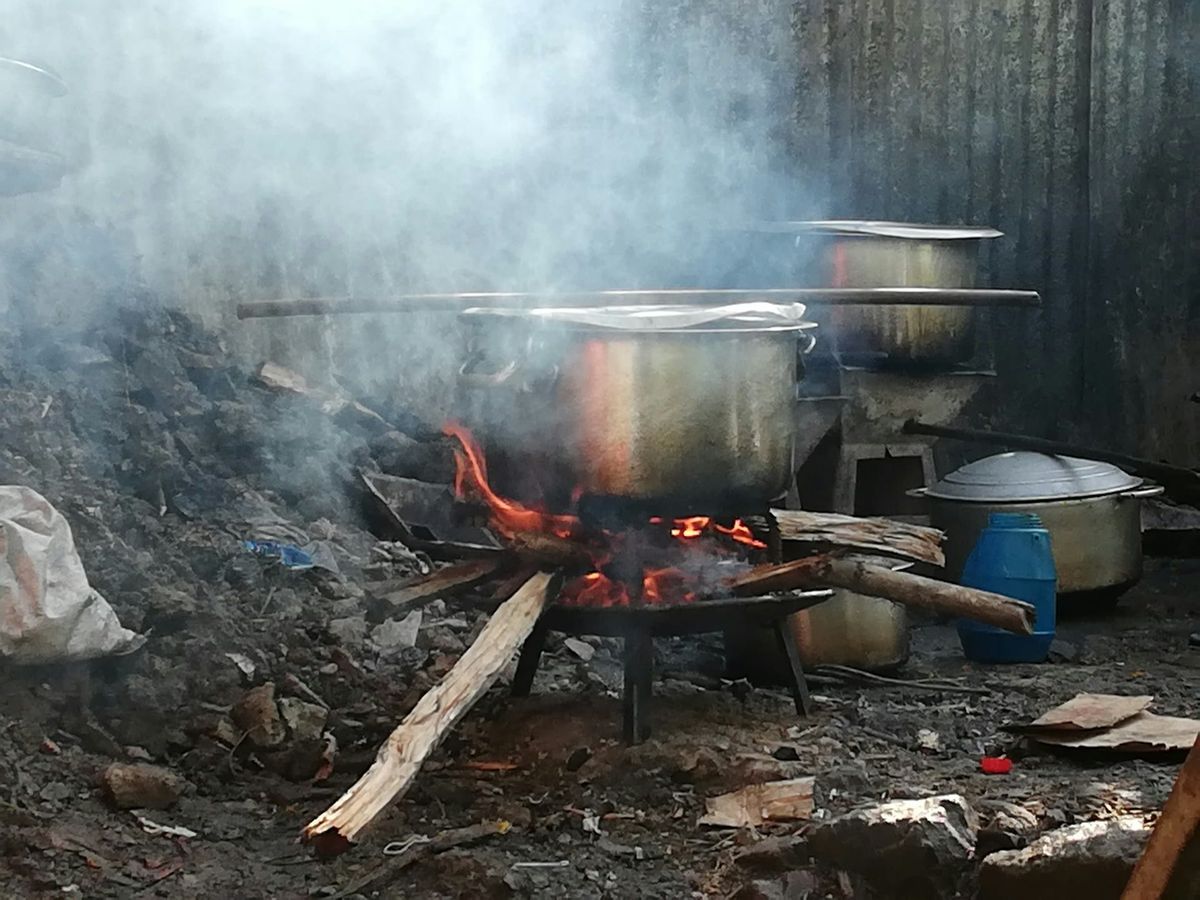
Almost 2.5 billion people, approximately one-third of the global population, cook their meals on open fires or basic stoves, burning wood, agricultural wastes, charcoal, or even animal dung. The smouldering biomass releases harmful pollutants such as small particulate matter that accelerates respiratory and cardiovascular disease, and contributes to around 3.7 million premature deaths each year.
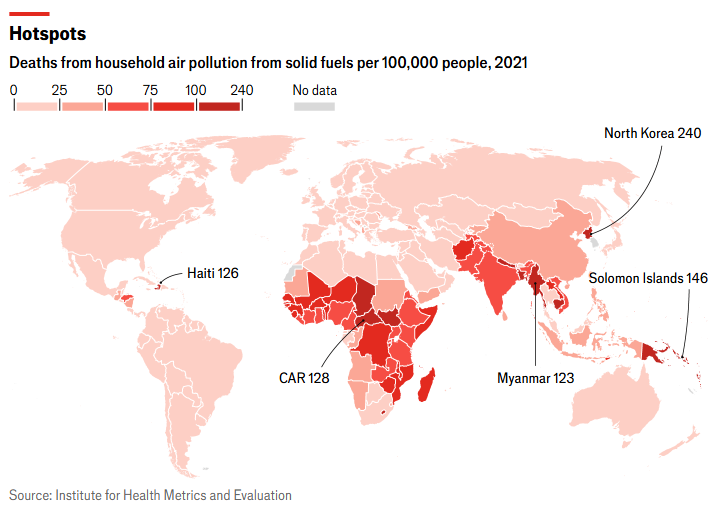
Although the situation has improved in recent years, many lower-income parts of the word remain heavily exposed to indoor air pollution from cooking. The region with the highest rate of exposure is Africa, where 40% of people are exposed to indoor air pollution from solid biomass fuels, followed by Asia on 15-20%.
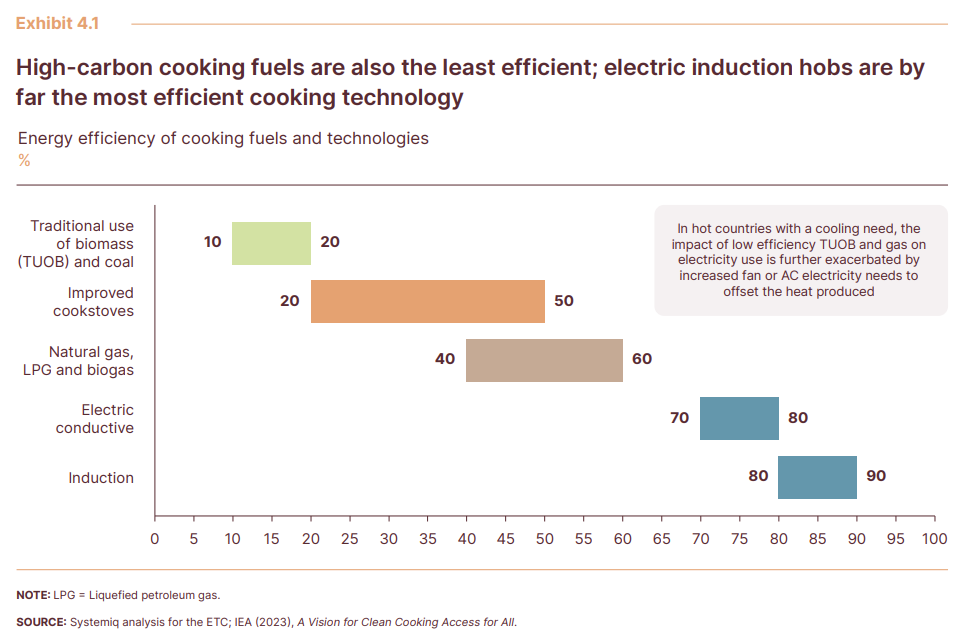
Traditional biomass stoves are extremely inefficient with only 10-20% of primary energy converted to useful heat. More efficient biomass stoves can increase fuel efficiency to around 50%, with the degree to which they reduce emissions dependent on the sustainability of the biomass harvested to fuel the stove - a factor known as the fraction of non-renewable biomass (fNRB).
The next most efficient means of cooking (converting 40-60% to useful energy) are stoves fuelled by biogas or LPG. The latter has the advantage of being easy to transport and store in pressurised cylinders. It also emits around half as much GHG's as the average traditional biomass stove. Biogas stoves offer the highest potential emission savings, but the fuel supply is often unreliable with stoves an expensive upfront cost.
Conductive electric stoves deliver up to 80% efficiency with inductive stoves maxing out at 90%. Aside from the high cost of electric stoves, the main challenge is access to a reliable supply of electricity, and where it is available, the degree to which the grid is powered by low carbon generation. For example, around 75% of the population of Sub-Saharan Africa lack access to electricity, although this is likely to improve as solar panels combined with batteries come down in price.
The International Energy Agency (IEA) estimates that achieving universal clean cooking by 2030 could reduce GHG emissions by 800 Mt CO2e per year, plus an additional 700 Mt CO2e per year due to avoided deforestation. The IEA's estimate excludes black carbon, a short-lived aerosol emitted when burning biomass with a 20-year warming impact up to 4,500 times greater than CO2. As such, clean cooking is likely to make a significant difference in slowing near-term global warming as well as longer-term climate change.
How much does this cost? At the moment, annual investment in clean cooking is estimated to be around $2.5 billion, of which a fraction (~7%) is directed at the region most at need, Sub-Saharan Africa. The IEA thinks that annual investment in clean cooking will need to rise to $8 billion between now and 2030 to achieve universal access. A cumulative investment of around $60 billion, of which almost 80% would be spent on advanced stoves. Working out at ~$40 per tonne CO2, universal clean cooking is one of the most effective carbon abatement opportunities around.
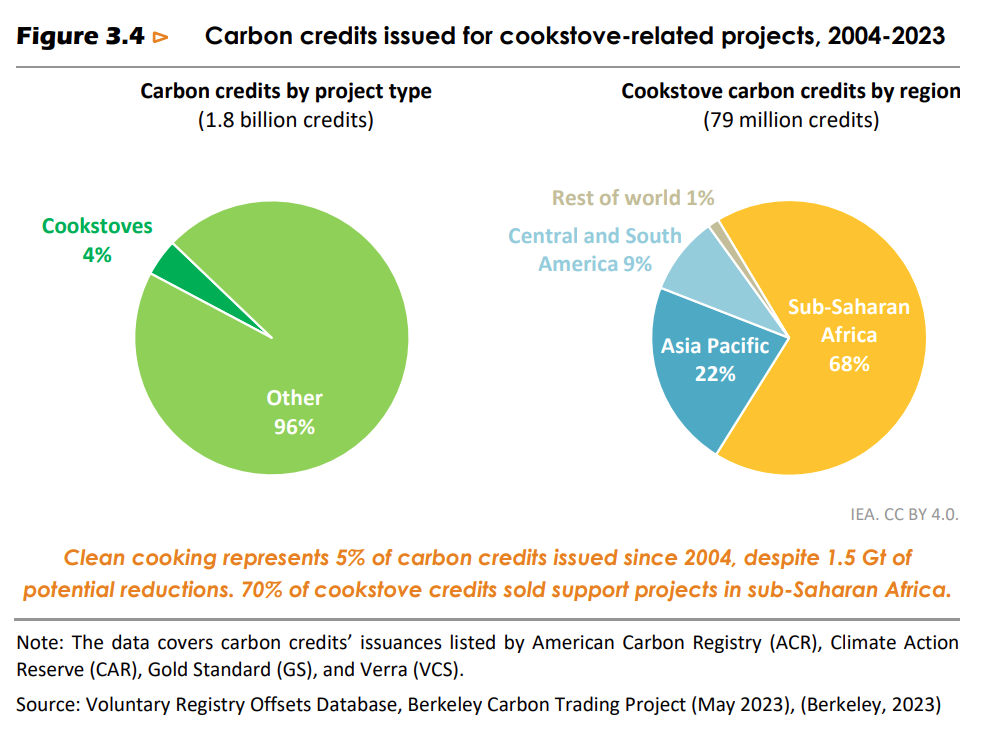
Yet despite the potential climate benefits, cookstove projects only account for a mere 5% of the carbon credits issued during the past 20 years. While large Asian economies such as India and China have paired dedicated public funding with private investment to move towards clean cooking, that option isn't available to parts of Africa with high debt burdens. Since 2024 almost 80 million cookstove carbon credits have been issued, with Sub-Saharan Africa accounting for more than two-thirds of the project supply.
Scoring the cookstove carbon credit projects against measures of integrity (i.e., whether they are real, measurable, and additional), it's clear that the risk of additionality is very low. Advanced, efficient cookstoves are often unaffordable for households in rural areas in developing countries. Revenues generated from the sale of cookstove carbon credits allow project developers to subsidise cookstoves or distribute them for free, removing a key barrier to their adoption. Analysis by Calyx Global, a carbon credit ratings agency, indicates that over 80% are likely to be additional.
Nevertheless, additionality alone isn't sufficient to ensure a high integrity carbon credit. A study published in 2024 and carried out by the University of California uncovered substantial over-crediting of cookstove credits: ~9 times larger than estimated real emission abatement. The majority of the over-crediting arises due to a lack of rigour in how methodologies determine the fraction of non-renewable biomass (fNRB), firewood-charcoal conversion factors, and tracking fuel consumption and cookstove usage.
The analysts found projects using Gold Standard’s Metered methodology (first published in 2021), which directly monitor stove use and fuel consumption, to be most aligned with their estimates: ~1.5 times over-credited. The results suggest that if the market stops using outdated methodologies, and instead employs advanced metered stoves then there will be significantly less risk of over-crediting. The Integrity Council for the Voluntary Carbon Market (ICVCM) has approved three new cookstove methodologies this year, hoping to boost confidence among buyers in the credits generated.
The problem is that at present the market is not rewarding cookstove project developers. Buyers are still stuck in the out-dated methodologies mindset where over-crediting was rife and the carbon credit price was commensurately low. Analysis by UK-based platform Abatable suggests that won't work any longer if the market is going to continue to have impact.
The chart below shows the development cost per cookstove carbon credit under different methodologies: from inexpensive legacy approaches using the most basic stove, through to the most expensive and latest metered methodologies using advanced cookstoves. Where available Abatable have charted the median spot price (as of April 2025) to show whether or not developers generate a return.
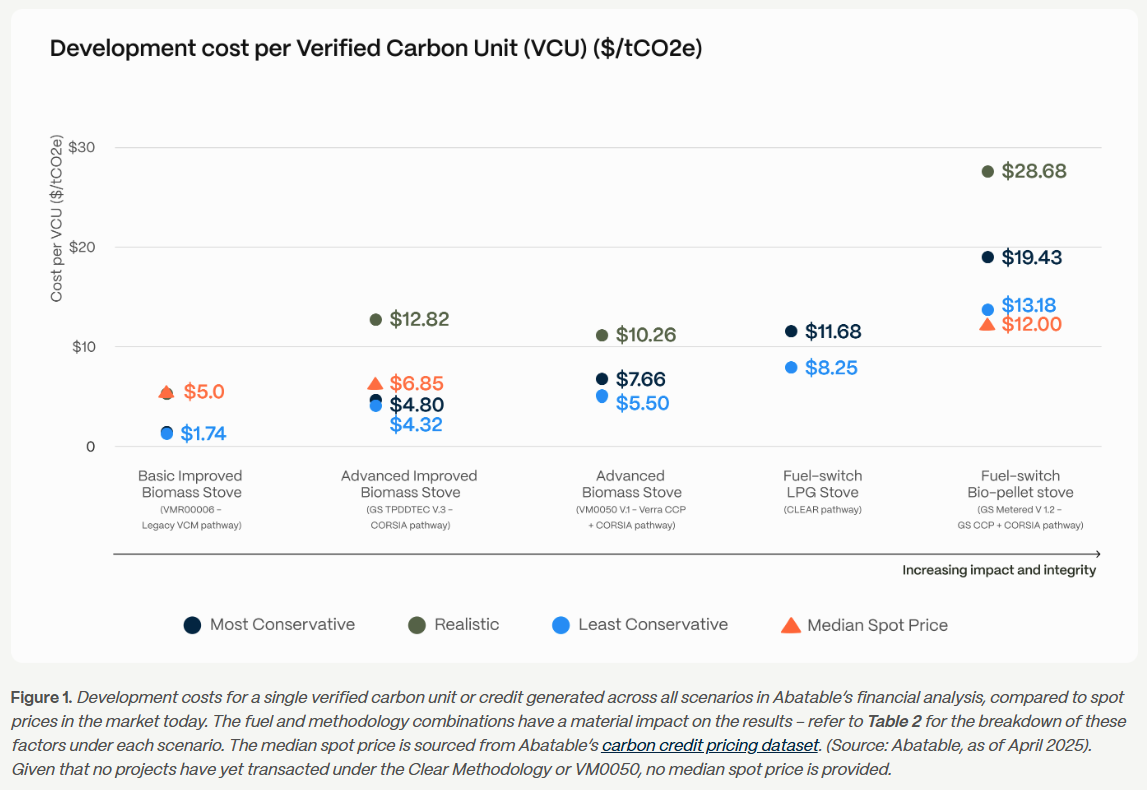
It shows that high impact projects involve significantly greater development costs (2-4 times higher), yet the prices at which buyers are currently paying do not reflect the higher costs involved. If as Abatable suggests, developers need to secure a 2X return on investment (double the realistic development costs) in order to break even, then the spot price would need to be at least $15-25 per tonne CO2 for advanced biomass and LPG stoves, and perhaps more than $40 per tonne CO2 for bio-pellet stoves.
What's needed is a change in the narrative, and on that front things are starting to happen. Even the most vociferous of carbon credit critics now acknowledge that some VCM approaches - such as carbon dioxide removal (CDR), landfill gas capture, and advanced cookstove methodologies - "do not suffer from the same fundamental problems that have characterised the rest of the offset market to date." In turn, ratings agencies such as Calyx Global are reporting that although new cookstove credit issuances have dropped, there is a sector-wide shift towards higher GHG integrity.
The share of households in Sub-Saharan Africa exposed to high levels of indoor air pollution from cooking is stubbornly high. In the absence of government or institutional funding, carbon markets are going to be essential if the poorest people in the world are to escape hells kitchen. Combine that with 1.5 Gt CO2 of emission abatement, at a cost of just $40 per tonne CO2, and cookstove carbon credits starts to look like a compelling investment.
 Peter Sainsbury