CORSIA-correction required
UN carbon offset scheme likely to be superseded in Europe by the EU ETS


Welcome to Carbon Risk — helping investors navigate 'The Currency of Decarbonisation'! 🏭.
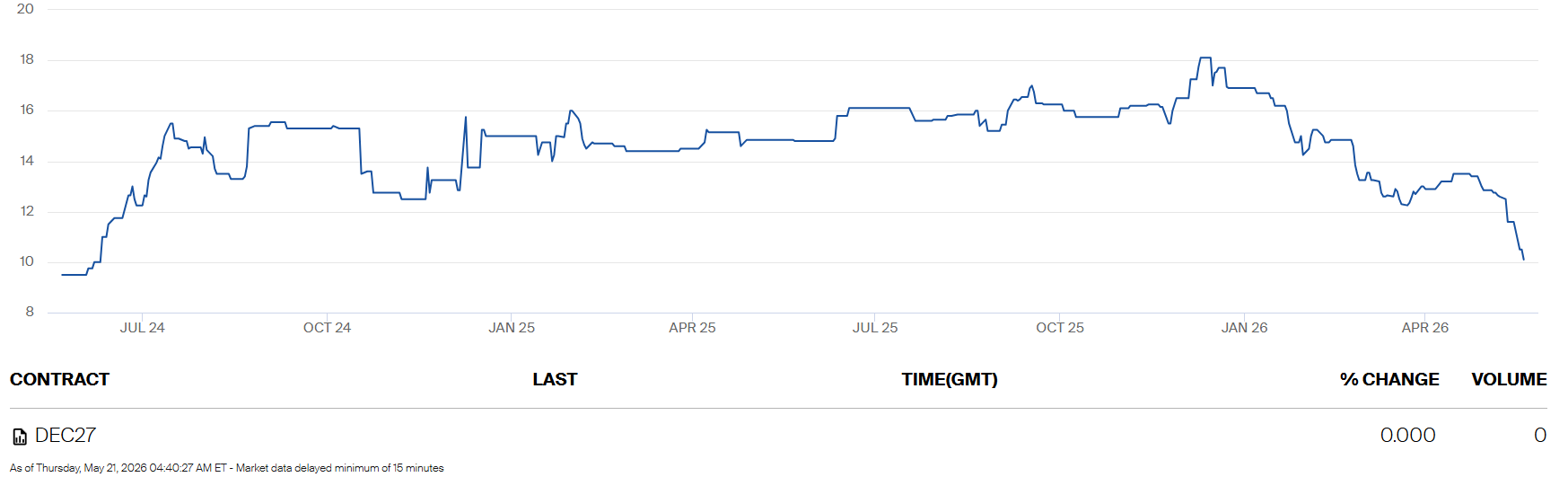
The December 2025 CORSIA futures price has slumped by more than 40% since late 2025 to a 23-month low of $10.10.
What's going on?
To recap, CORSIA, the Carbon Offsetting and Reduction Scheme for International Aviation, is a market-based system backed by the UN’s International Civil Aviation Organisation (ICAO) to compensate for international aviation emissions.
Airlines operating under participating jurisdictions (130 at the last count) must compensate for any emissions above 85% of their 2019 levels. Under the first phase of CORSIA (2024-2026) airlines must purchase sufficient Eligible Emission Units (EEUs) to cover their excess emissions by January 2028.
In contrast to the objective underpinning the EU ETS, CORSIA only aims to limit the pace of emissions growth, not actually bring aviation emissions down. Here's where the problems start, and it alludes to why the CORSIA carbon price has nose-dived this year.
The EU, ICAO, and the airlines have known for more than a decade now that 2027 was going to be the crunch point. In 2011 the EU expanded the ETSs coverage to also cover all flights leaving and departing the European Economic Area (EEA). However, in the face of international backlash from countries such as the United States, China, India and other major economies, the EU agreed to 'stop the clock', exempting ex-EEA flight emissions on the condition that ICAO acts.
The EU’s ETS Directive mandates that by 1st July 2026, the European Commission must publish a report assessing CORSIA's environmental integrity and the degree to which countries are participating. Essentially, the report must answer two questions: 1) whether CORSIA is consistent with the goals of the 2015 Paris Agreement, and 2) if countries covered by CORSIA make up more than 70% of international airline emissions.