Scorchio!
The hot take on Europe's extreme heatwaves, why the ECB is worried but knows how to fix it, and why decarbonisation requires deeper Single Market integration

Welcome to Carbon Risk — helping investors navigate 'The Currency of Decarbonisation'! 🏭.
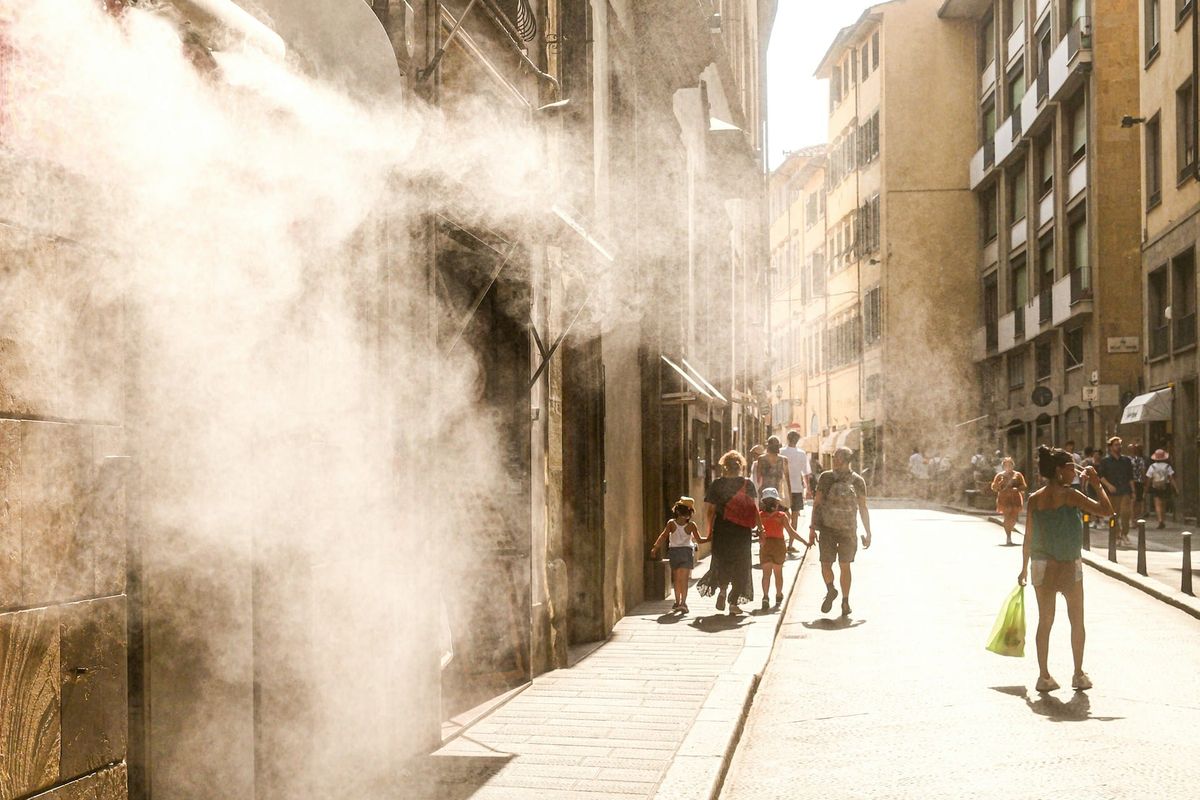
June 2026 was western Europe's hottest June on record according to Copernicus, Europe’s climate agency. The average surface air temperature was 3.05°C above the 1991-2020 average, beating the previous record that was only set 12 months ago. The recent heat wave would have been "virtually impossible just 50 years ago", according to Worldwide Weather Attribution, reflecting the impact of rising fossil fuel emissions on the climate.
The heatwave is estimated to have resulted in 10,000 excess deaths across western Europe. Aside from the human cost, the region has borne a large economic cost too. Allianz estimates that the heatwave may have cut Europe’s annual GDP by as much as 0.5% due to the hit to labour productivity, supply chain disruption, and higher energy costs.
However, with Europe Earth’s fastest warming continent (temperatures have been rising by 0.56°C per decade since the mid-1990's, more than double the global average), the current extreme heatwaves could be a mere portent of what Europe will experience in coming years.
The biggest concern is what Allianz calls the “non-linear economic transmission of heat stress”. This is where losses intensify sharply after a “critical threshold around 30C” is breached. The insurer analysed a scenario in which the five hottest years between 2014 and 2024 were repeated sequentially between 2026 and 2030. The impact? Cumulative GDP losses of some 5-7% across Europe's major economies.
Macro volatility and financial instability
Climate change and extreme weather events also pose a challenge to Europe's financial policymakers, who must now increasingly deal with the associated macroeconomic uncertainty caused by higher and more volatile inflation.
In the view of Frank Elderson, a member of the European Central Bank's (ECB) executive board, institutions such as the ECB must "account for the ongoing climate and nature crises when preparing their inflation forecasts", or risk underestimating the degree of inflationary pressures.
What's more, climate change could disrupt economic activity and increase the risk of financial instability. For example, around three quarters of all corporate loans in the euro area granted to non-financial corporations critically dependent on at least one ecosystem service. Elderson believes that Europe's exposure to climate and nature shocks could in turn "impair the transmission of monetary policy to the real economy."
To bolster Europe's "resilience to these risks and lessen their economic impact," Elderson argues that we should "accelerate the transition to net zero carbon." By accelerating the adoption of renewable energy, batteries, and electric vehicles, Europe could slash its reliance on imported fossil fuels, boosting its energy security and limiting one of the main causes of inflation volatility (see Electric avenue: Europe set to outline its path to electrification and energy security).
Uncertainty the binding constraint on decarbonisation
In his speech, the ECB executive board member highlights four key barriers to the green transition: 1) insufficient pricing of carbon emissions, 2) regulatory uncertainty and complexity, 3) access to finance, and 4) visible upfront costs and invisible benefits.
As noted on Carbon Risk previously, much of the world experiences a significant negative carbon price. Fossil fuel subsidies give carbon intensive firms a competitive advantage. By not paying the cost of the negative externality, polluting firms receive a subsidy relative to those that have invested in cutting their emissions (see Fuelling controversy: Fossil fuel subsidies act like a negative carbon price).
Read this article and more with a 30-day free trial