Repost: Blue sky thinking
As climate policy splutters, governments should sell the benefits of clean air

Welcome to Carbon Risk — helping investors navigate 'The Currency of Decarbonisation'! 🏭.
"the United States is being unnecessarily invaded by filthy, polluted, and unhealthy air, the quality of which is dangerous, and totally unacceptable!" - President Trump
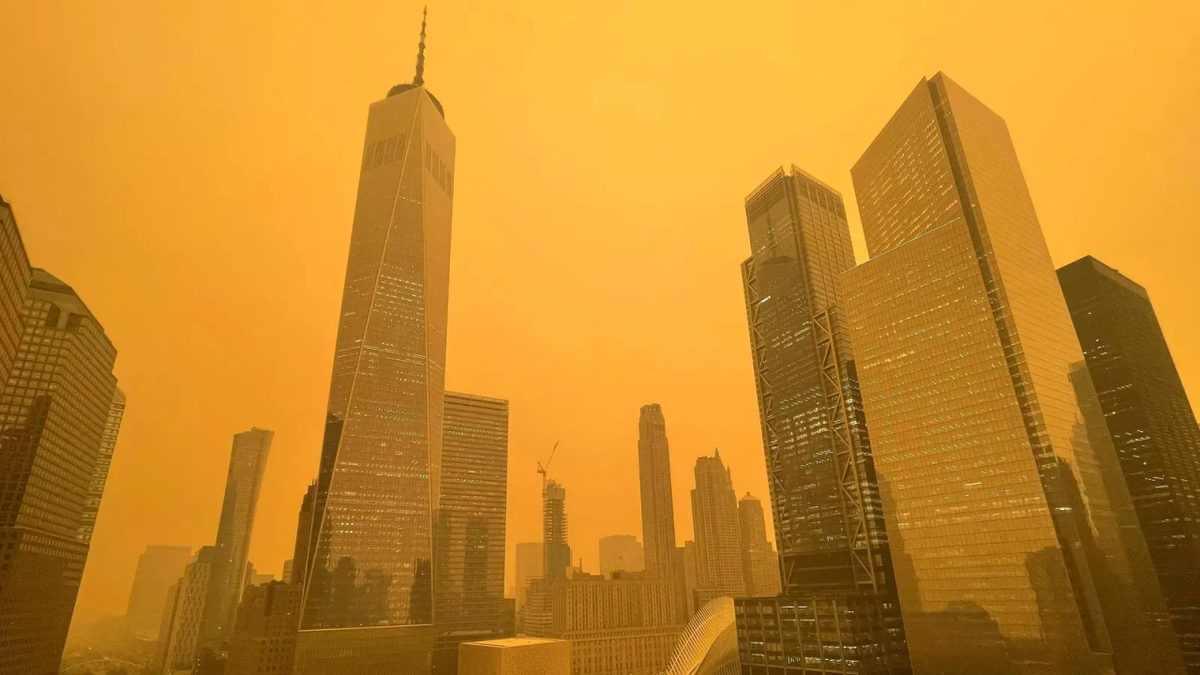
Smoke from several hundred wildfires, almost 200 of which located in north-west Ontario, billowed across the southern border into the United States. The smoke triggered air quality warnings from Minnesota to Maryland, blanketing New York in a dense haze just days before the World Cup final.
Taking to Truth Social, President Trump accused Canada of "Willful Negligence," adding that the smoke has cost America billions of dollars, for which the bill "must of necessity be added to the TARIFFS Canada is currently paying."
Quite how he calculated the cost remains a mystery. In January the Environmental Protection Agency (EPA) downgraded the value per human life used in cost-benefit analyses of pollution restrictions to...zero!
Trump was of course careful to avoid assigning any of the blame to climate change. Instead, accusing the Canadians of "not properly maintaining their Forests, and Brush therein."
Accelerating climate change has meant that wildfires are now larger, hotter and more destructive. Canada is particularly exposed. Home to more than a quarter of the worlds boreal forests, the country is warming twice as fast as the global average. Forest management helps at the margin, but tackling the cause is the only long-term solution.
Air pollution is perhaps the most visceral example of a negative environmental externality that knows no borders, one that requires countries to work together rather than assigning blame. Days after Trump issued his demand that Canada face retribution, officials in British Colombia issued an alert warning that smoke emanating from wildfires in Washington and Oregon was heading north and coming their way.
As I discuss in the article below (first published in February 2025, but now available without the paywall), with climate policy spluttering, governments should sell the benefits of clean air. It's not just about the environment, or even the climate, clean air has huge health and economic benefits too. What's not to like?
🛫 Note that I’m taking a break from carbon markets for a couple of weeks. I will be back at my desk in early August 🛬
Read this article and more with a 30-day free trial
The term ‘tragedy of the horizon’ was coined by Mark Carney, former Governor of the Bank of England.
First outlined in a speech to Lloyds of London in September 2015, Carney argues that the “catastrophic impacts [of climate change] will be felt beyond the traditional horizons of most actors - imposing a cost on future generations that the current generation has no direct incentive to fix.”
That insight has been brutally thrust into the mainstream during the past few years as citizens focus on more immediate economic concerns (i.e., the inflationary impact of higher energy prices), and political sentiment turns sharply against net zero policies.
Governments under pressure to dump climate policies are missing a trick. They can break the ‘tragedy of the horizon’ by re-targeting their efforts towards clean air. It means switching the narrative away from the multidecadal challenge to decarbonise, and towards the more immediate health and economic benefits of cutting air pollution (see Climate change - A tragedy in three parts).
Remember that although burning of fossil fuels is the main source of anthropogenic greenhouse gases (GHG) such as carbon dioxide and methane, those same activities also result in a cocktail of other pollutants being released into the air that are damaging to human health and natural ecosystems. Although there is a risk that climate and clean air policies counteract each others end goals, tackling one type of emission does typically help to curb other harmful air pollutants.
Air pollution in particular is much more salient to people than GHG emissions or biodiversity loss. The history of economic development suggests that once air pollution reaches a certain level, calls to the government to do something about it become deafening. In contrast to GHG emissions, air pollution does not suffer from the tragedy of the horizon. The impact from air pollution is felt today. The benefits to cleaning it up can be seen tomorrow.
For example, in 1950’s Britain, smoke generated from the excess burning of coal combined with fog, resulting in a thick layer of smog across several major cities. It became known as “The Great Smog of 1952” and resulted in thousands of untimely deaths. The smog prompted Parliament to pass laws forcing urban households to stop burning the most polluting grade of coal, and encouraging nearby factories to switch to smokeless fuels (see Prosperity bends the curve).
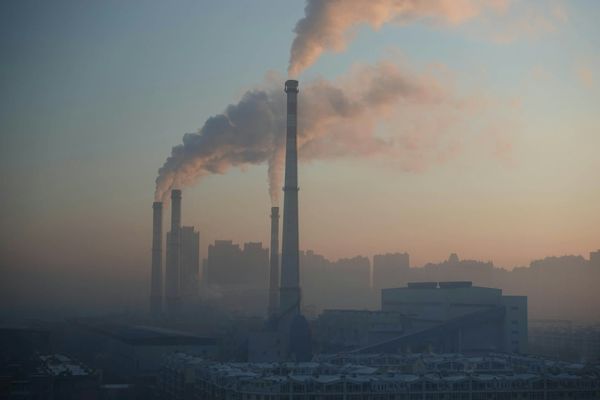
More recently, in 2013 China introduced draconian measures to curb air pollution in Beijing. At the beginning of the year dark sulphurous clouds descended on the capital. Residents who ventured outdoors would find their throat burning as the air filling their lungs had 60 times the recommended healthy level of fine particulate matter (PM2.5). In response authorities imposed a nationwide cap on coal use, divided up among provinces, banned new coal-burning capacity and sped up the use of filters and scrubbers. During the decade following Beijing’s “airpocalypse”, average annual PM2.5 levels in the city declined by 70%.
A toxic choke hold
The most hazardous forms of air pollution include sulphur dioxide (SO2), nitrogen oxides (NOx), and fine particulate matter (PM2.5). Sulphur dioxide combines with water vapour to form sulphuric acid, the main component of acid rain. Once it falls from the sky it can damage forests, freshwater habitats. Sulphur dioxide can also combine with nitrogen oxides and ammonia to form PM2.5. Nitrogen oxide can also aggravate respiratory diseases, while also harming ecosystems by increasing the concentration of nitrogen in the soil or water.
PM2.5 is the most dangerous type of air pollution since it increases the risk of health problems like heart disease and asthma. PM2.5 is a type of air pollution made up of “fine particulate matter" measuring 2.5 micrometres across or less – roughly 30 times smaller than the width of a human hair. Burning fossil fuels, especially coal, gasoline and diesel is a major source of PM2.5. Wildfires and the dust blown from deserts are also major sources of PM2.5 emissions, with the former more dangerous given its unpredictability.
Most studies put the number of deaths associated with air pollution to be between 4 million and 8 million people per year. A recent study found that long-term exposure to PM2.5 alone was responsible for an estimated 4.1 million attributable deaths worldwide (7.3% of the total number) in 2019. Another study estimated that 8.7 million deaths in 2018 were associated with air pollution resulting from just the burning of fossil fuels. One can always dispute the assumptions underpinning a study, but it’s clear the human cost alone from air pollution is enormous, certainly several million people each year, primarily linked to the increased risk of respiratory and cardiovascular diseases.
A drag on productivity
Of course the cost isn’t just measured in human lives. There’s a monetary cost too. The International Monetary Fund (IMF) recently published a study estimating the annual economic costs of air pollution for more than a hundred countries from 2015 to 2022. While the economic cost resulting from air pollution in 2022 was equivalent to 1% of GDP in the US, it was much higher in China (6%), and exhibited a wide range across Europe (between 1-5%). The worst effects from air pollution tended to be in low and middle income countries.
A separate study from the Organisation of Economic Cooperation and Development (OECD) examined the impact of lower air pollution on productivity and GDP in Europe between 2000 and 2015. The report estimates that a 1 microgram per cubic metre (µg per m3) reduction in the annual concentration of PM2.5 resulted in a 0.8% increase in GDP in Europe during the period 2000-2015. The authors concluded that the reduction in air pollution explained one sixth of overall EU economic growth during those 15 years.
Part of the problem is that these negative externalities are not adequately priced by the market. Government subsidies make the problem worse, encouraging consumers to use fossil fuels inefficiently. More than $1.1 trillion was spent in 2022 by governments seeking to protect citizens and industry from the impact of higher wholesale energy prices, according to the International Energy Agency (IEA) (see Fuelling controversy: Fossil fuel subsidies act like a negative carbon price).
Undercharging for local air pollution and global warming accounted for 42% and 29% respectively of the total monetary value of the negative externalities in 2020. The IMF calculates that correcting this mispricing would avert 1.6 million premature deaths per year from local air pollution by 2030, and generate economic benefits equivalent to 3.6% of global GDP.
Cap-and-trade is about more than CO2
In the absence of energy subsidy reform the next best option is to use emissions trading schemes combined with local emission standards. The IMF thinks that such a combination of policies could reduce CO2 emissions by around 20% in 2030 relative to what would have occurred, and avert 1.2 million premature deaths per year from air pollution.
The EU ETS is the cornerstone of Europe’s climate policy. Launched in 2005 it was set up to reduce GHG emissions and help Europe meet its ambitious climate targets. Analysis examining the impact of the EU ETS shows that CO2 emissions fell 15.4% during the period 2005-2020 more than they would have done in the absence of the EU ETS.
The EU ETS does not currently regulate the emissions of sulphur dioxide (SO2), fine particulate matter (PM2.5), or nitrogen oxides (NOx). However, given the same sectors responsible for the bulk of Europe’s CO2 emissions (utilities and heavy industry), also contribute to air pollution, it’s not unreasonable to think there might be a knock-on effect on these other pollutants too.
A recent paper from the University of Hamburg investigated the impact that the EU ETS has had on these three other air pollutants, comparing the relative emissions of those sectors covered by the scheme, versus those not covered. It found that the EU ETS was responsible for a decline in emissions between 2005 and 2021 of 15.2 million tonnes of SO2, 0.9 million tonnes of PM2.5, and 4.8 million tonnes of NOx. That’s equivalent to 18.3%, 3.3%, and 2.6% of observed economy-wide emissions during the same period.
As time has gone on by the relative improvement in emissions has tended to increase. For example, the analysis indicates that in 2021 the EU ETS was responsible for a 60% decline in SO2 emissions, and a ~30% drop in PM2.5 and NOx emissions, relative to where they would have been in the absence of the ETS.

No time for a breather
The impact of emissions trading on air pollution in Europe is likely to accelerate later this decade, assuming ETS2 is launched on schedule. Recall that ETS2 is a separate emissions trading scheme that will cover buildings, road transport, as well as those manufacturing industries (under 20 MW threshold) that are not yet covered by ETS1 (see ETS2 carbon price could rapidly breach €100: Europe's second carbon market is expected to be very sensitive to emission allowance scarcity).
The European Environmental Agency (EEA) estimates that buildings and road transport accounted for 36% of EU GHG emissions in 2022. Monitoring and reporting of emissions began in 2024, while full compliance obligations (i.e., including procuring and surrendering allowances) is expected to begin in 2027.
Road transport (exhaust and non-exhaust emissions) and fossil fuel based heating (coal is commonly used for home heating in Poland) are both major sources of air pollution. If ETS2 encourages commuters to switch to an EV the tailpipe emissions go to zero (assuming there’s no change to the generation mix), while the non-exhaust emissions (e.g., dust from brake, tyre, and road wear) remain broadly the same (assuming EV’s are the same weight as ICE vehicles). Meanwhile, ETS2 could incentivise a switch towards heat pumps that produce zero emissions or air pollution.
ETS2 could have make a big impact on adverse health outcomes and improve productivity and overall economic development. The think tank Bruegel estimated the cost of air pollution across each European country as a share of GDP during the period 2014-2020. The average cost across the EU was 6% of GDP, but this masks huge regional differences.
The Scandinavian countries incurred a cost equivalent to close to 1% of GDP, compared with more than 10% of GDP in Poland, Greece, and Bulgaria. Bruegel does project that these numbers will come down in 2024-2030, but the inequality in terms of impact is expected to remain. The health impact also varies greatly from one region to another. Northern Italy, Poland and Czechia are the hardest hit in terms of PM2.5 mortality, while large cities in western and southern Europe suffer the greatest impact from NOx air pollution.

A hazy picture
The adverse impact of air pollution from road transport and the heating of building is significant. The potential economic and health benefits associated with ETS2 are compelling. Policymakers in Europe, and particularly in those countries most affected by air pollution really should be making a stronger case with their citizens.
However, the disparity in impact between different parts of Europe also serves to highlight why the politics is more difficult. It’s another tragedy, one that I haven’t mentioned yet, but that’s fundamental to curbing air pollution: the tragedy of the commons. This occurs when a public resource (also called a commons) is over-exploited as individuals, acting in their own interest, ultimately deplete the resource, to the detriment of others.
The solution lies in property rights, supply management and pricing the externality. First off, assigning property rights means that resources should be managed more sustainably, but in order to get to this point we need to know who is producing what air pollution, where, and when, and that calls for much smarter air quality monitoring.
The environmental technology non-profit OpenAQ publishes regular reports detailing the availability of ground monitoring data. Their 2022 report reveals that 39% of countries do not monitor air quality, while an additional 8% appear to monitor air quality, but do not share the data with the public. Even in Europe the coverage is patchy. There’s clearly a paucity of PM2.5 stations in northern Italy and Poland, both known air pollution hotspots. The hazy picture restricts our ability to make those that emit accountable for their air pollution.
Governments can break the ‘tragedy of the horizon’ by re-targeting their efforts towards clean air. It will require air pollution monitoring to improve and be made available to the public in real time. It will require policymakers to tout the benefits of climate policies such as the EU ETS, that have positive knock-on effects on clean air. Finally, it will need governments to be more open about the immediate health and economic benefits of cutting air pollution, and the trade-offs we make when we tackle one type of pollution versus another.
Carbon Risk offers flexible subscription options to suit all needs
- Need to create a corporate account with a purchase order?
- How about a group access discount?
- Want to get even more value with a 2 or 3 year contract?
Simply reply to this email to enquire.