Northern Lights the way
Europe's CO2 network is being bult in the North Sea, but for now it remains fragile


Europe's carbon capture and storage (CCS) is expected to gather momentum in 2026 as the development of the North Sea's CO2 value chain network coincides with increasing pressure on heavy industry to decarbonise.
This is not an expensive distraction meant to extend the lifespan of fossil fuels. For carbon intensive process industries, such as cement and fertiliser, there really is no alternative path to full-scale decarbonisation than carbon capture.
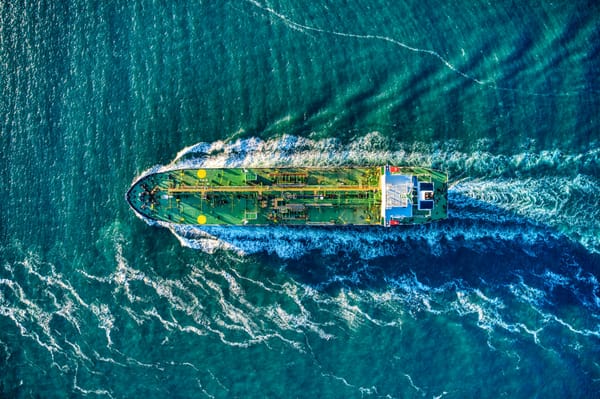
The Northern Lights project located in Norway is the worlds first CO2 transport and storage network. Captured CO2 will be shipped in specialised vessels to an onshore receiving terminal in western Norway, before being transported by pipeline to a location 100 kms off the coast. From there it will be permanently sequestered 2.6 kms beneath the Norwegian continental shelf (see Following in LNG's wake: First shipment of liquefied CO2 could be a prelude to a global marketplace).
The first CO2 volumes were successfully injected into the Aurora reservoir in August.
In Phase 1 of its development, the reservoir will be capable of storing 1.5 Mt CO2 per year. Phase 2 will see the transport and storage capacity increase more than three-fold to a minimum of 5 Mt CO2 per year and is expected to be operational by the second half of 2028.
In August 2025, Heidelberg’s 0.4 Mt CO2 per year CCS plant in Brevik, Norway became the first supplier of CO2 to Northern Lights. The plant is the worlds first large scale carbon capture facility for the cement industry, preventing around half of its annual emissions escaping into the atmosphere.
The second carbon capture project to store CO2 at Northern Lights is expected to be Yara’s ammonia and fertiliser plant in Sluiskil, the Netherlands. In 2026 the facility is set to become Europe’s largest CCS project, capturing ~0.8 Mt CO2 per year.
The final supplier of CO2 under Phase 1 is the Klemetsrud energy-from-waste (EfW) plant in Oslo, Norway. Although not currently obligated under the EU ETS, a report on the inclusion of waste emissions is expected to be published by the end of July 2026. The Klemetsrud CCS plant is expected to be operational in late 2029 and capture ~0.35 Mt CO2 per year.
Other North Sea CO2 storage hubs in development include the Dutch Porthos project (~2.5 Mt CO2 per year of storage is expected to become operational in 2026), and the Greensand project off the cost of Denmark (expected to store ~0.4 Mt CO2 early in 2026, rising to a potential 8 Mt CO2 per year by 2030). Both of these CO2 storage hubs have been developed to serve heavy industries located in north-west Europe.
Overall, European CO2 injection capacity - European Economic Area (EEA) and the UK - is projected to reach between 18 Mt CO2 and 108 Mt CO₂ per year by 2030, according to an analysis of 33 current and planned CO₂ storage sites. Assuming capacity ends up somewhere around the middle of this range then ~60 Mt CO2 per year could be injected by 2030. It would more than meet the binding target, laid out in the EU's Net-Zero Industry Act (NZIA), that injection capacity should reach 50 Mt CO2 per year by 2030.
The UK is outside of the EEA of course. Norway, the home of the Northern Lights project, is a member. That's important. The EU's CCS Directive allows CO2 emissions to be stored outside of the EU+EEA area, but any emissions stored this way (for example, under the UK Continental Shelf) will still count as being emitted under the EU ETS and so face the cost of EU emission allowances (EUAs).
In the absence of political earthquake that brings the UK back into Europe’s fold, the only solution for non-EEA countries is to operate storage sites under an ETS linked to the EU ETS. And so, the ongoing discussions between the UK and Europe to establish a link between their respective ETS is more than just about equalising the carbon price. It could make a massive difference to the economics of the North Sea's CO2 network too. The UK and the EU aim to finalise the ETS linkage discussions in time for their next joint summit, due to be held this summer.
Momentum must accelerate
Although carbon capture capacity is limited at the present time in Europe, the number of operational CCS plants is expected to increase sharply over the next five years. Around 20 projects are currently under construction with more than 100 at the pre-FID stage. By 2030, CCS plants could be able to capture ~60 Mt CO2 of Europe's industrial emissions (assuming all proposed CCS capacity comes online), with the cement industry likely to account for more than one-third of installed capacity (see Ready mixed: How Europe's largest cement producers are rapidly cutting their Scope 1 emissions).
Read the rest of this article with a 30-day free trial*
*and get access to the entire archive!